



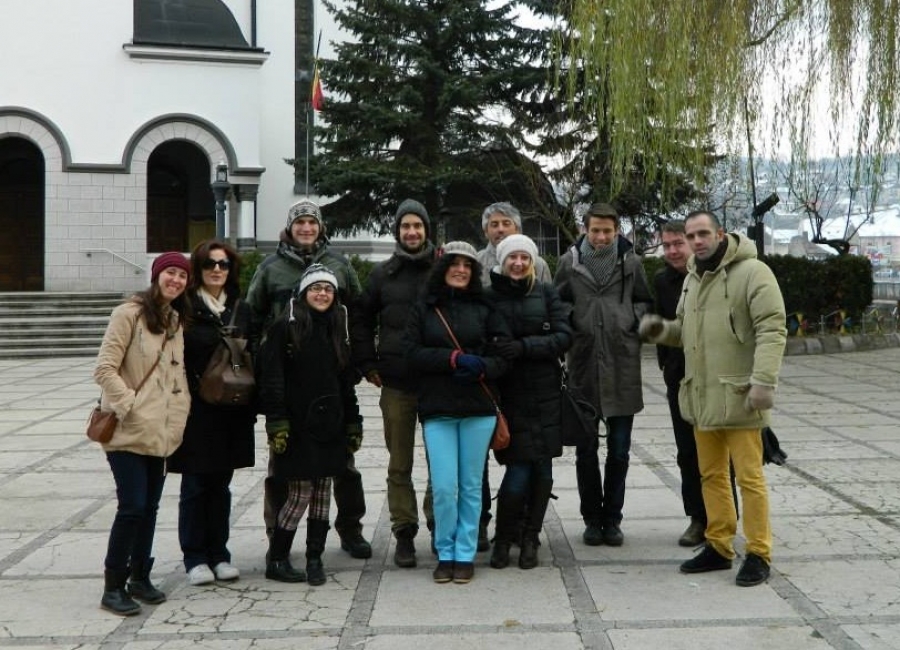
The first part of the project included: a meeting with Irénke Zaiba, the Director of the special primary school from Sumuleu Ciuc, which has pupils of exclusively Roma origin. Then we had a visit to the Zeyk Domokos Professional Highschool from Cristuru Secuiesc, where Gyöngyvér Pávai, the president of the school presented the nation wide program called Second Chance which is running in the school and which offers opportunities to youth and adults who dropped out from school to finish the first 10 classes of education in a special schooling system.
 Afterwards we made a visit to the Penitentiary of Targu Mures, which houses 50 youth convicts aged 14-17 and 300 young adult convicts aged 18-21. Here, one of the educators presented the group the re-education and schooling processes applied within the penitentiary. Last but not least, the group had a meeting with Angela Zsurzs, who is a social worker and the director of the child protection institute of Harghita County.
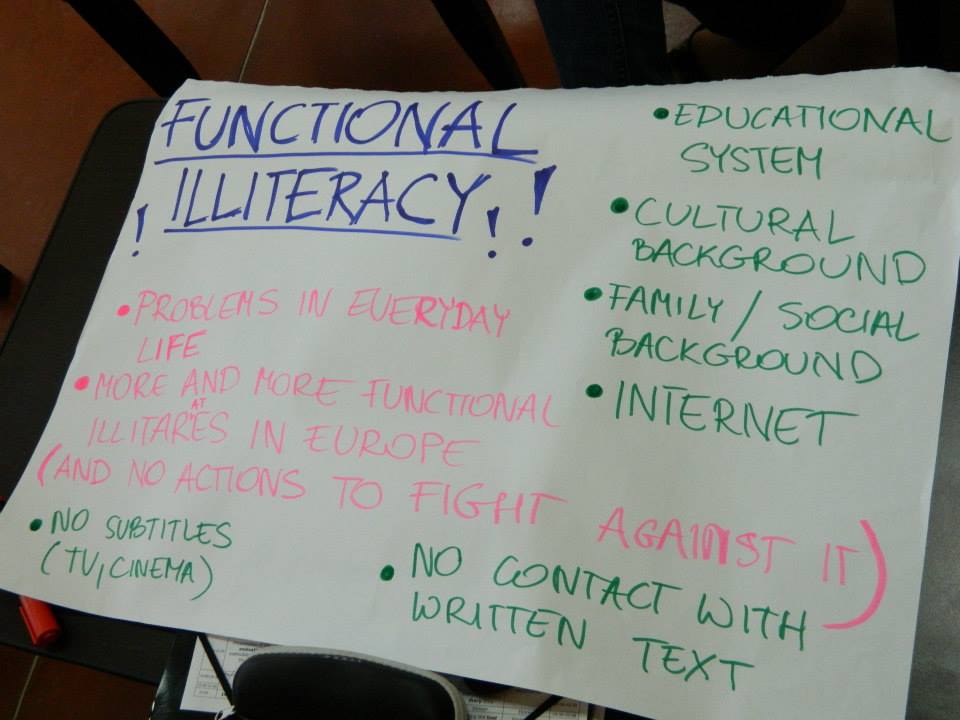
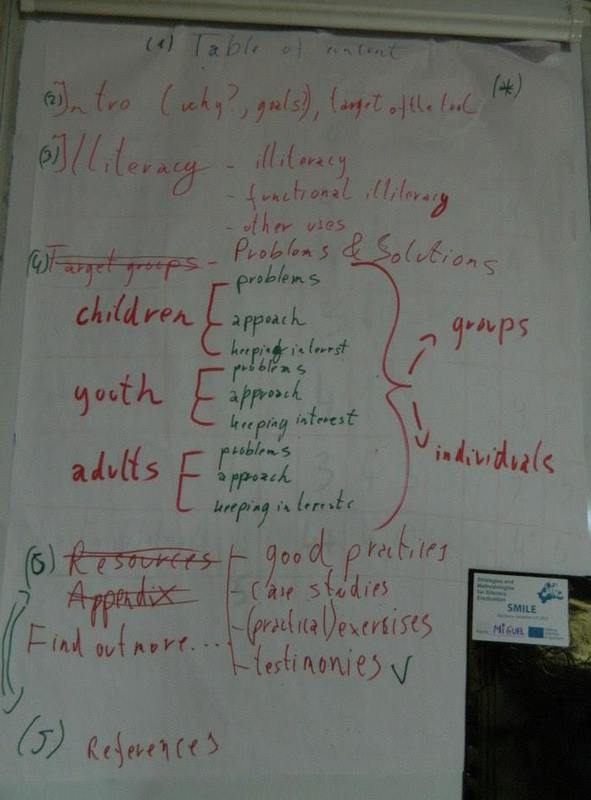
 Through these visits and meetings, we recognized the need for innovative tools to fight against illiteracy.We consider important to note that, for the purpose of this tool, the word “illiteracy” means analphabetism and a lack of reading and writing comprehension. We created one such tool whichis directed to anyone who is working in the field of illiteracy, mainly beginners in this field (teachers, NGO, social workers, volunteers, people interested in the field, etc.). The material is available to those who want to explore and learn more about illiteracy. The goal is to enlarge knowledge about illiteracy by collecting information about different methods and strategies that are being used. To tackle the issue and ways of developing them, we suggest strategies and methods for the target group of the tool. We hope our findings and suggestions to be used by others to see the problem in a more global aspect and to offer new opportunities to approach and work with illiterates.